


Orbital Laser

Black and white logo of Pepsi with a circular shape and wave design.
Close-up of a value PRICE tag in bold black letters on an orange background, with the price listed as $24.99.
Blender logo with an orange hand forming a circle around a blue and white eye
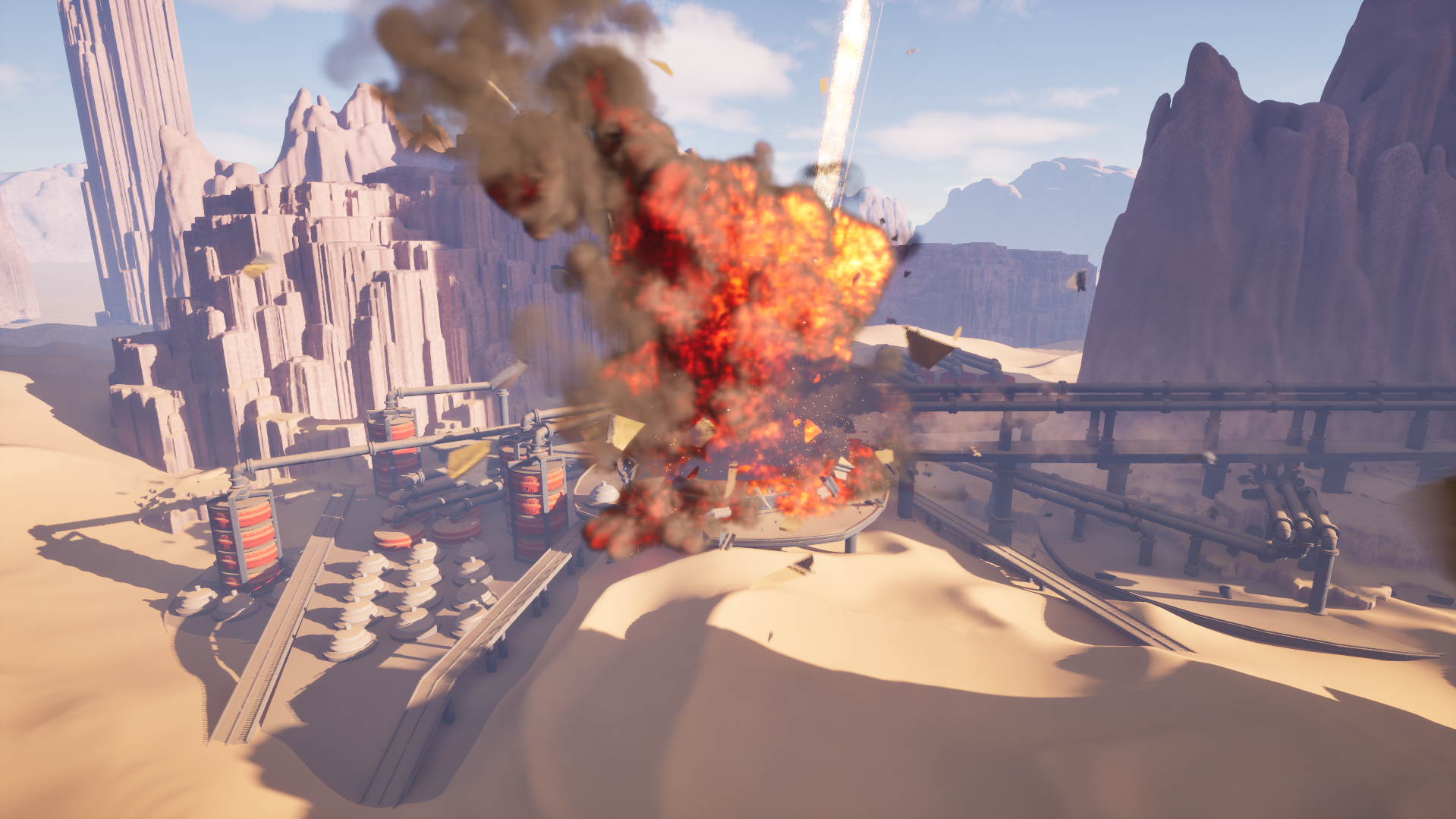
A large explosion with fire, smoke, and debris in a desert landscape, near an industrial facility with pipelines and tanks, amidst rocky formations under a blue sky.

Large Tank Explosion. Made in houdini using pyro.
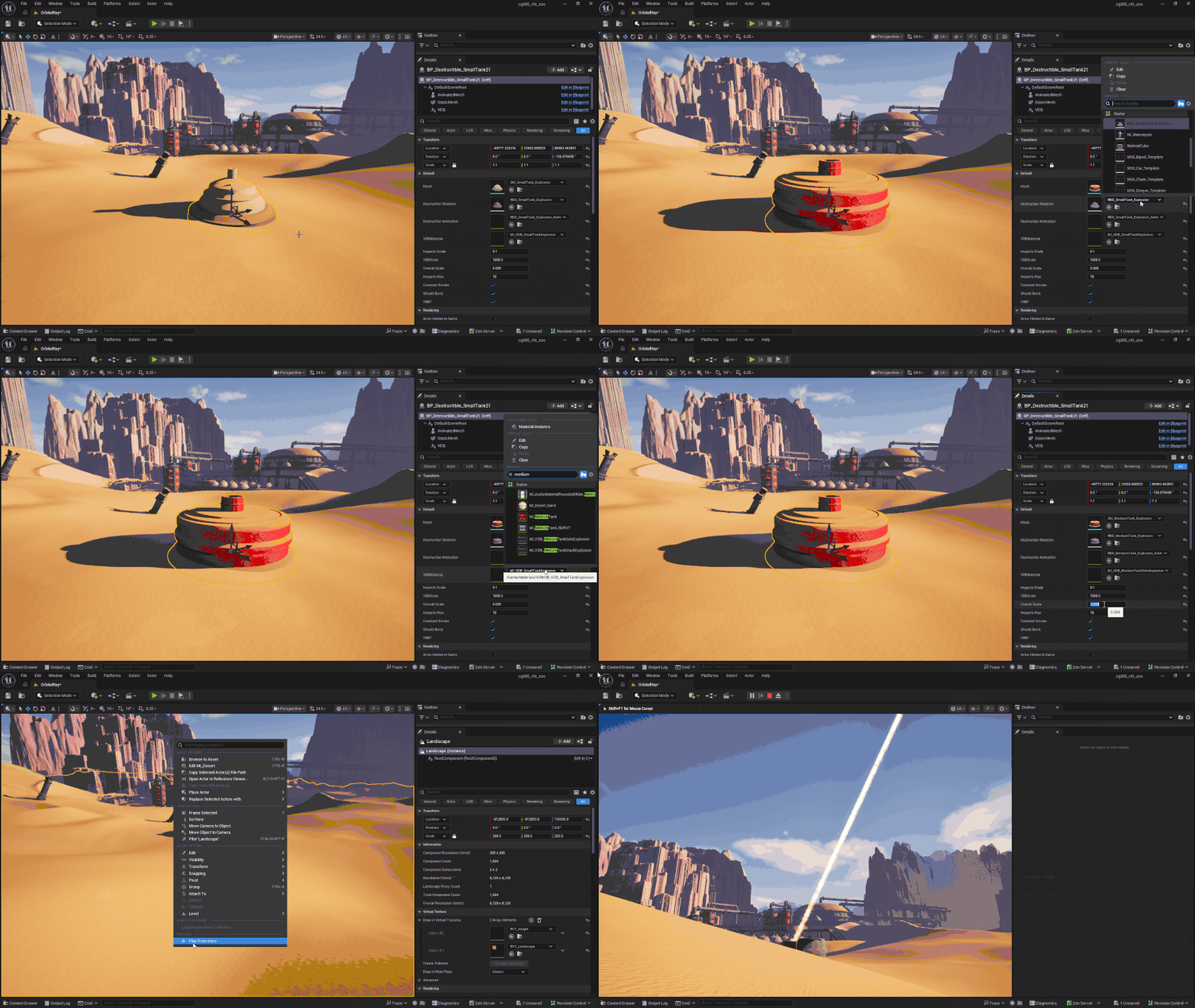
A desert landscape with a small, round military tank in the foreground and a futuristic industrial city in the background.

Destructible assets are easily swapped out during construction for easy iteration.
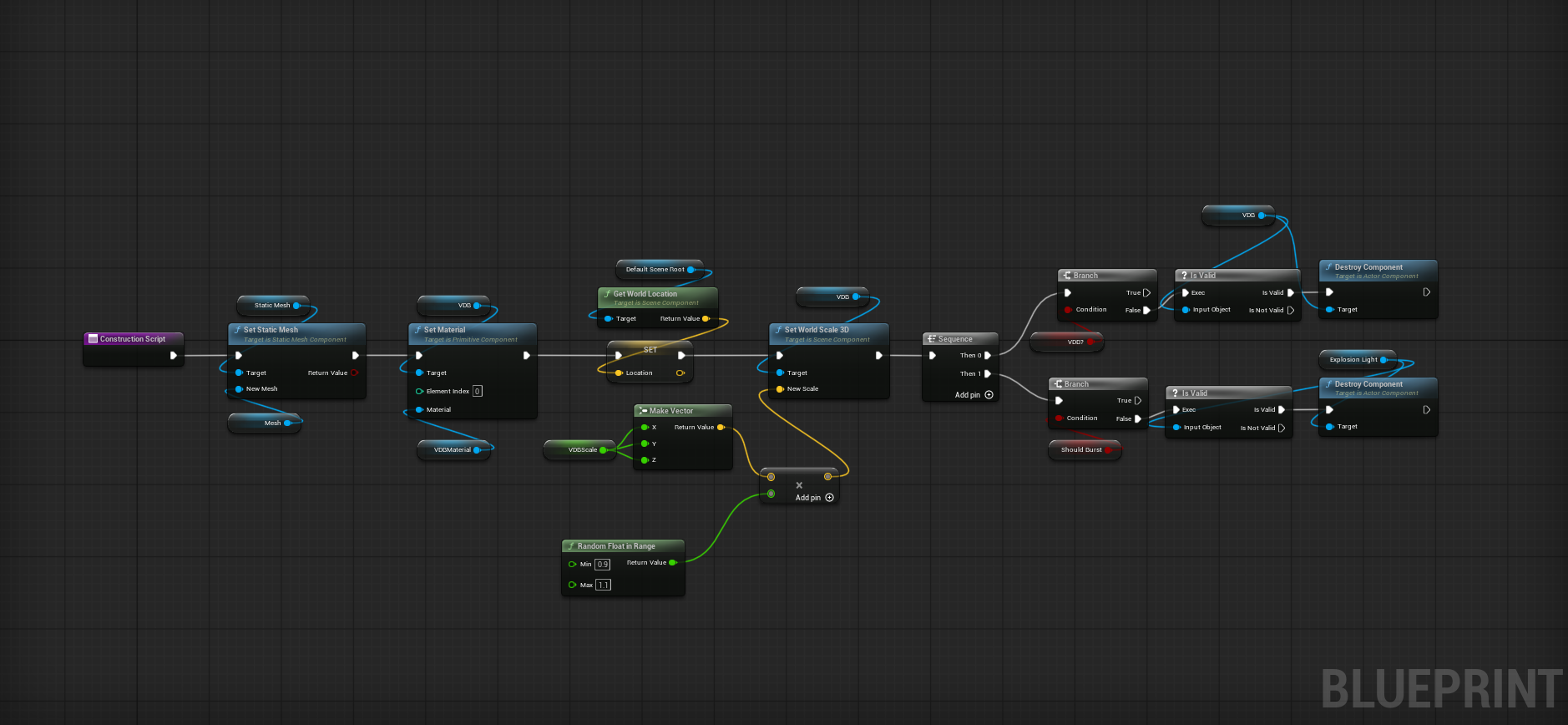
A complex node-based visual script within a digital blueprints interface.

On construction the asset is altered due to various parameters.
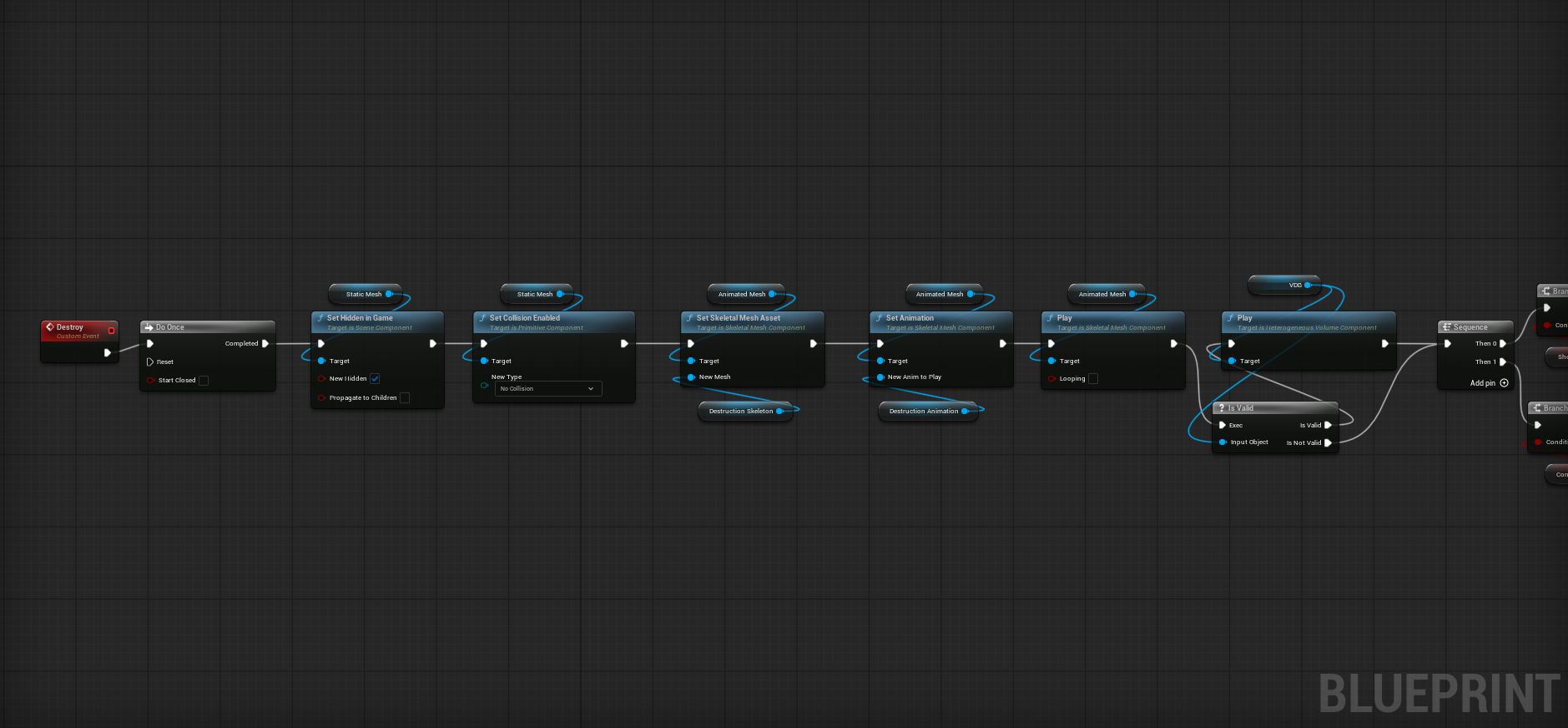
A screenshot of a visual scripting graph with interconnected nodes on a dark grid background, including nodes labeled 'Destroy,' 'Do Once,' 'Set Hidden in Game,' 'Set Collision Enabled,' 'Set Skeletal Mesh Asset,' 'Set Animation,' 'Play,' 'Is Valid,' 'Sequence,' 'Branch,' and 'Condition,' connected with blue and white wires.

Assets are triggered from the laser once. components are swapped out and the VDB plays.
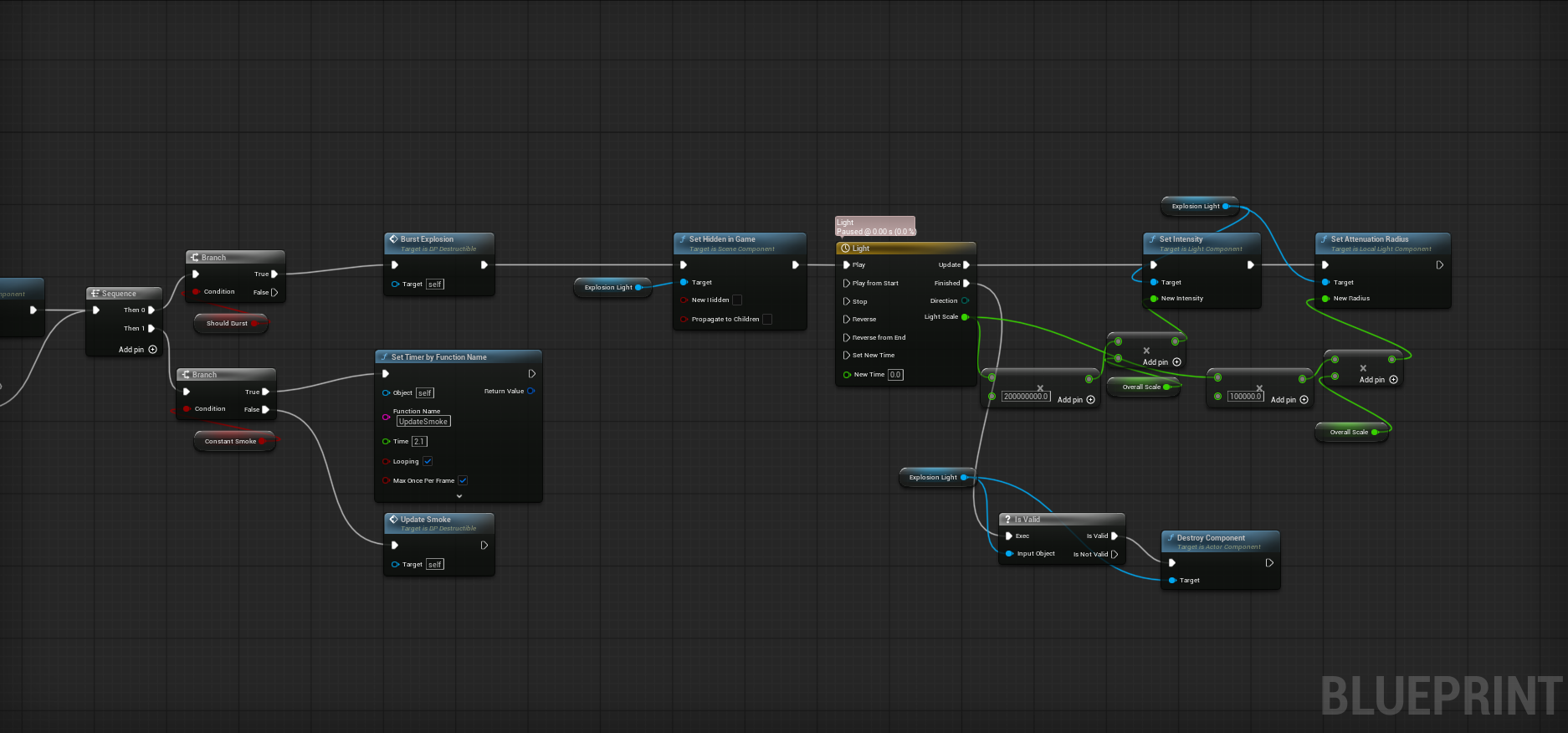
A blueprint view of a visual scripting graph in Unreal Engine, showing nodes, wires, and connections used in game development.

Then multiple options can activate due to input settings of the asset. Like a burst light and explosions spawned in from data channels.
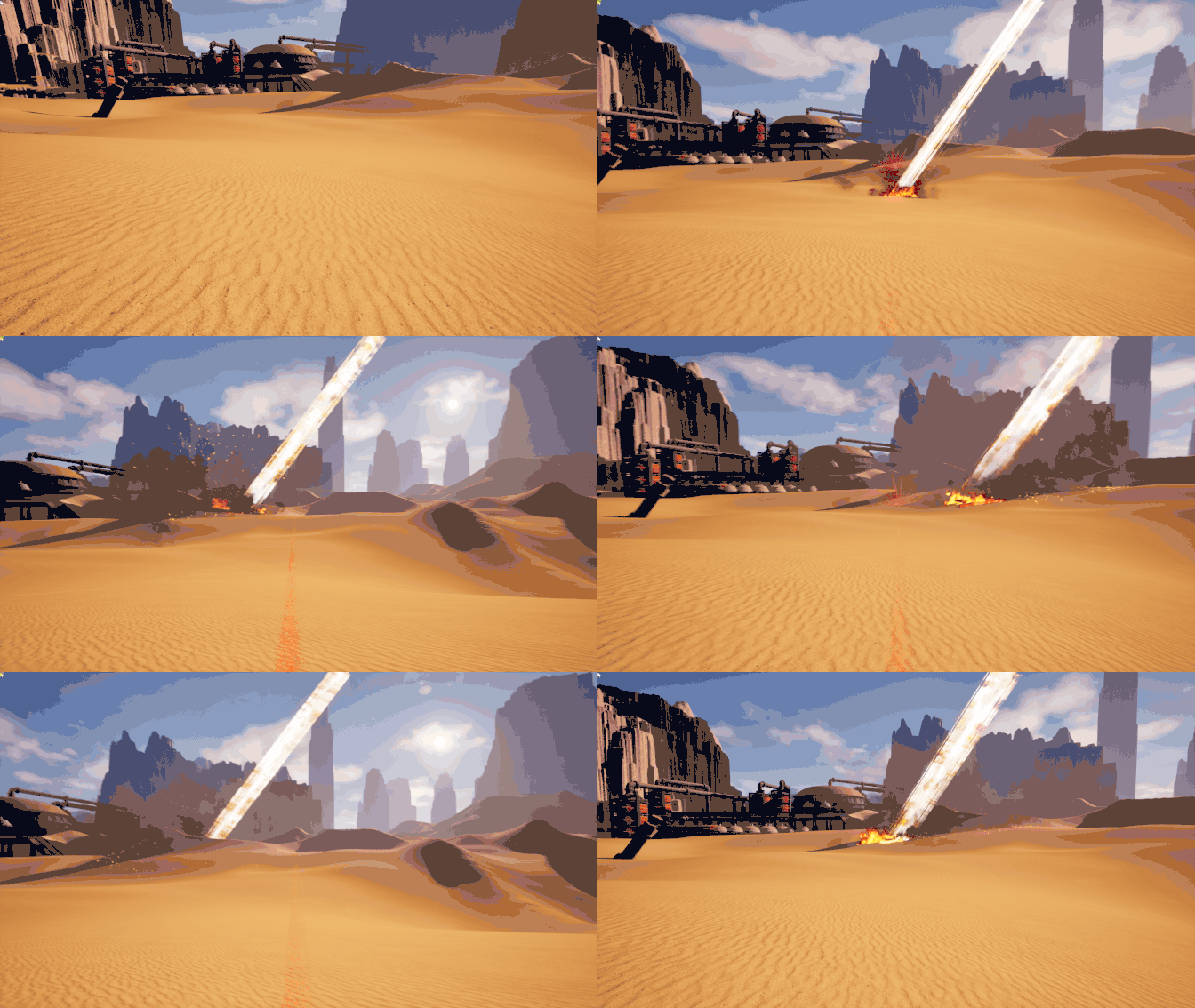
A vast desert landscape with sand dunes and a city skyline in the background, including buildings and aircraft on a runway or helipad.

Orbital Laser is controlled using a trace from the players camera and the target location is a combination of the laser’s vector and the player’s trace.
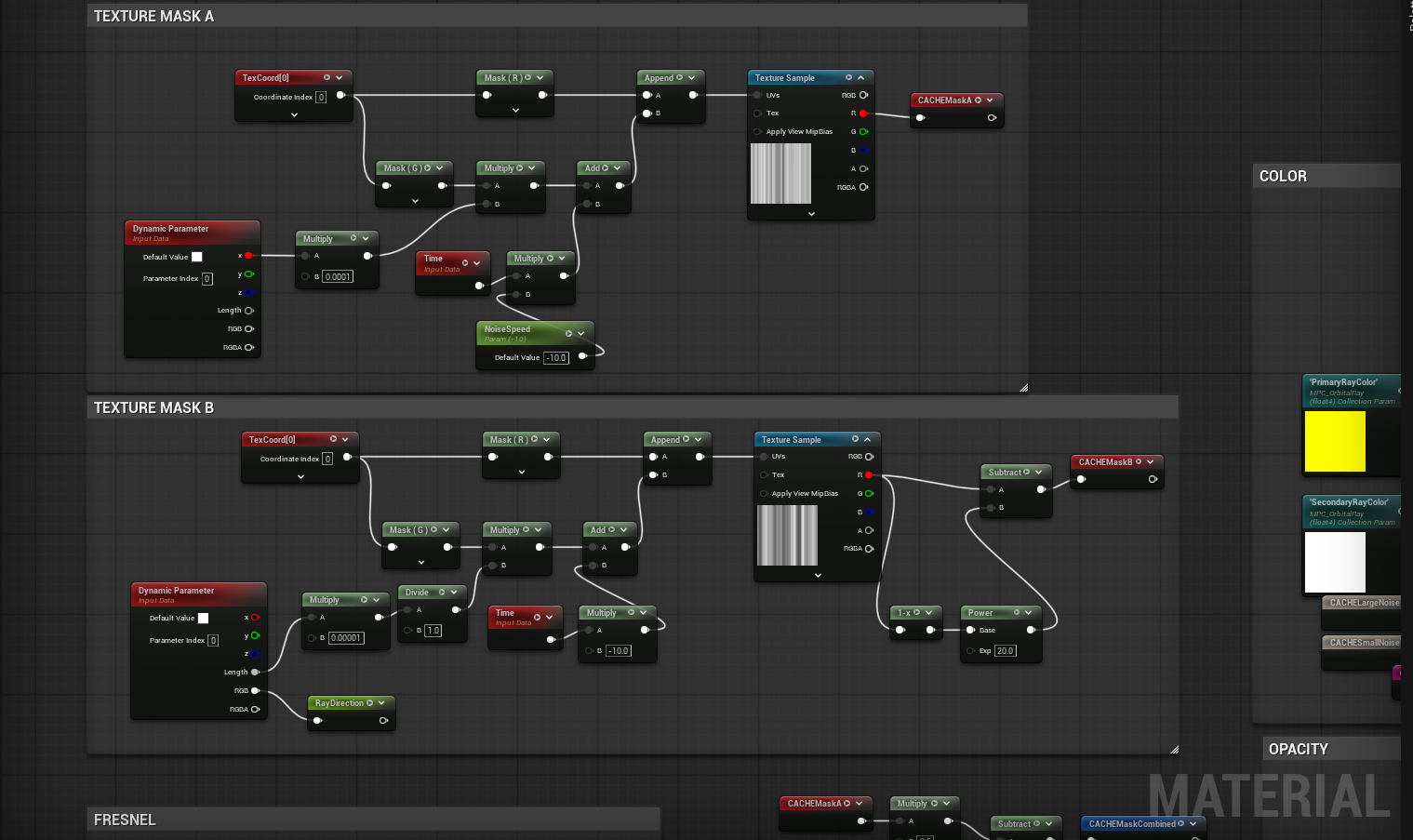
Screenshot of a shader graph interface illustrating the creation of a texture mask with nodes connected for texture sampling, parameter inputs, and color outputs.

Noise Textures are used and scaled by the laser’s length measured from the Niagara system.
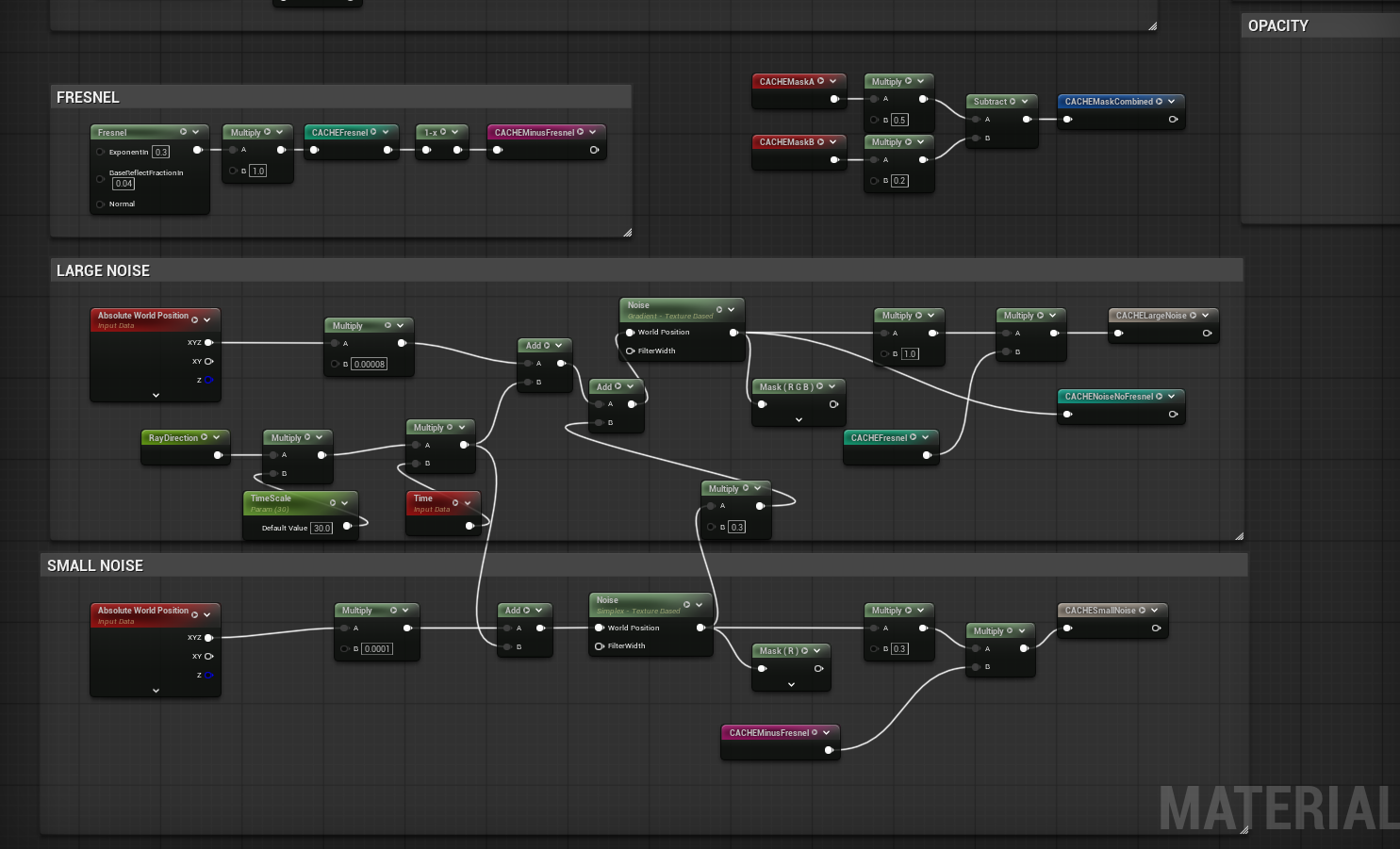
Screenshot of a shader graph with nodes and connections for creating visual effects, including sections labeled FRESNEL, LARGE NOISE, and SMALL NOISE, with color-coded nodes and parameters.

World Space noise is used to add deviation into the material. This gives the laser a more chaotic motion.
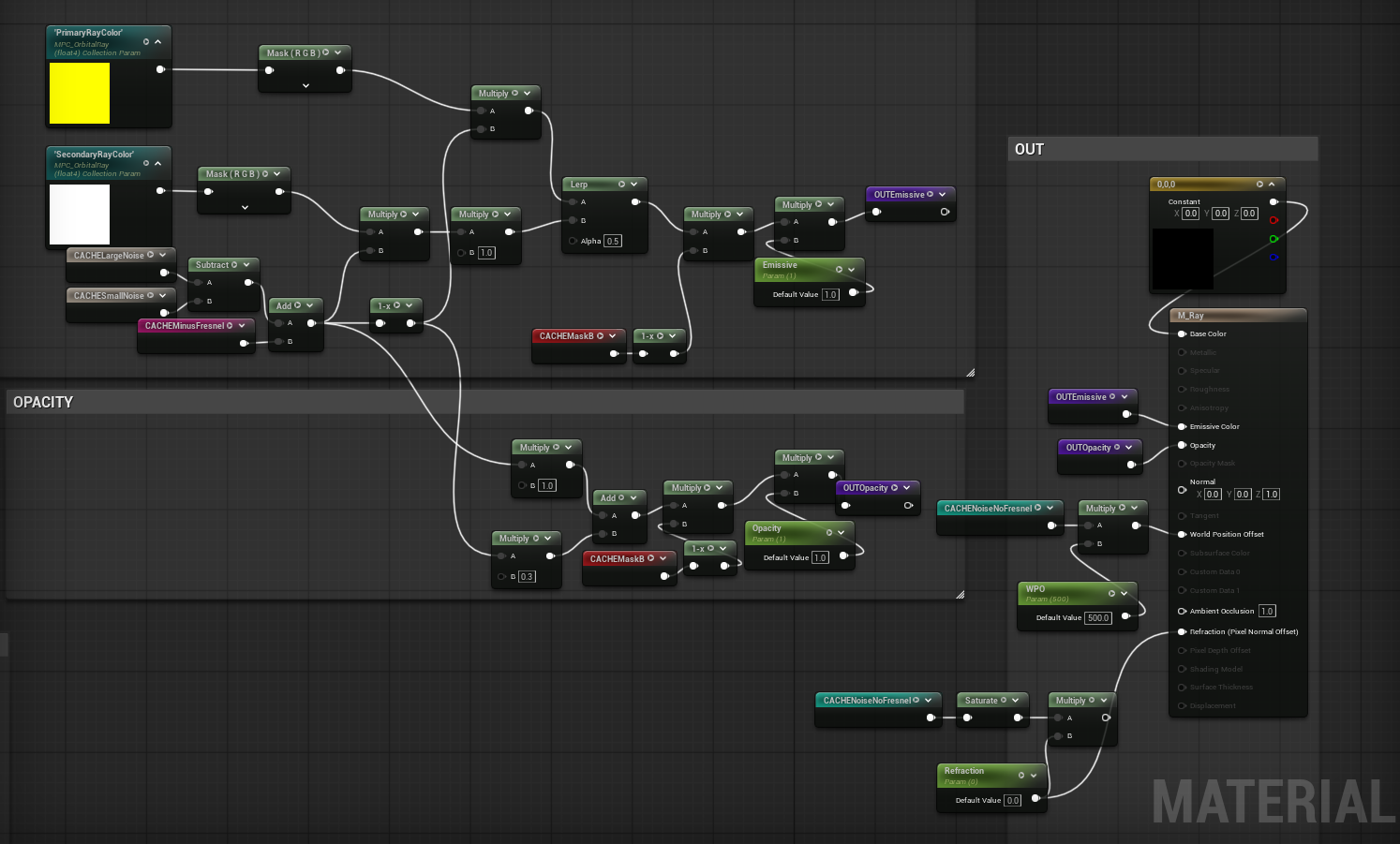
Screenshot of a complex node-based shader material graph in a 3D program workspace, showing various interconnected nodes used for material creation.

Two colors are used from a material collection. Noise is brought into world position offset to add some wobble.
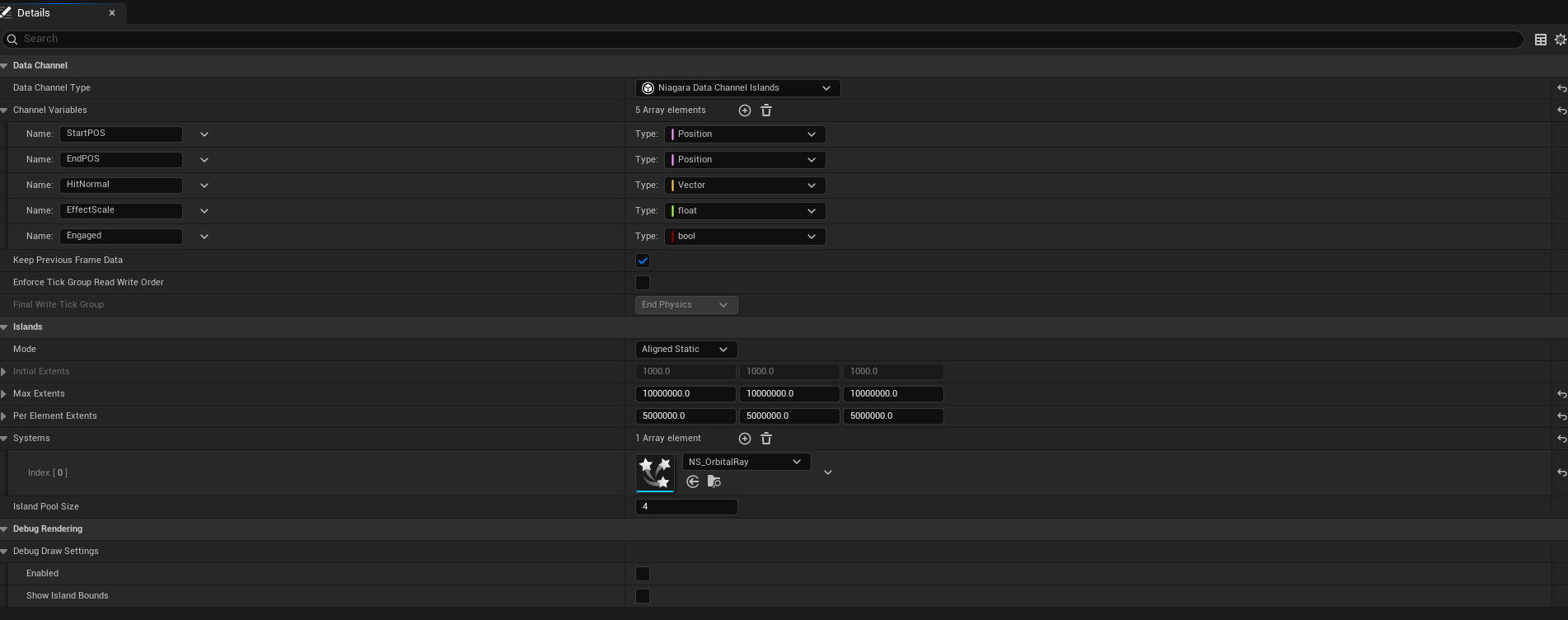
Screenshot of data channel settings in a software program, showing configurations for Neptune Data Channel Islands, including variables like StartPOS, EndPOS, HitNormal, EffectScale, and Engaged, with systems and debug settings.

Niagara Data Channels handle all of the Niagara effect spawning. This one in specific handles the laser’s various emitters.
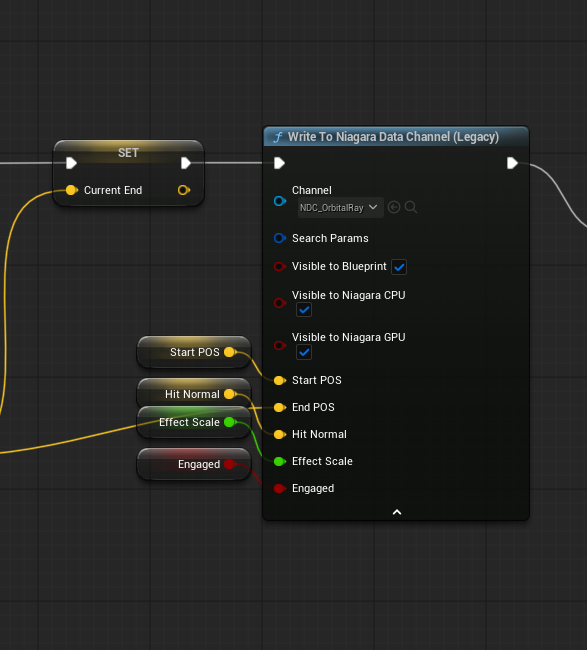
A screenshot of a visual programming interface showing nodes and connections related to writing data channels, with labels such as Start POS, Hit Normal, Effect Scale, and Engaged.

These Data channels are written to in the blueprint of the asset. The laser blueprint is pulling in trace data and scale.
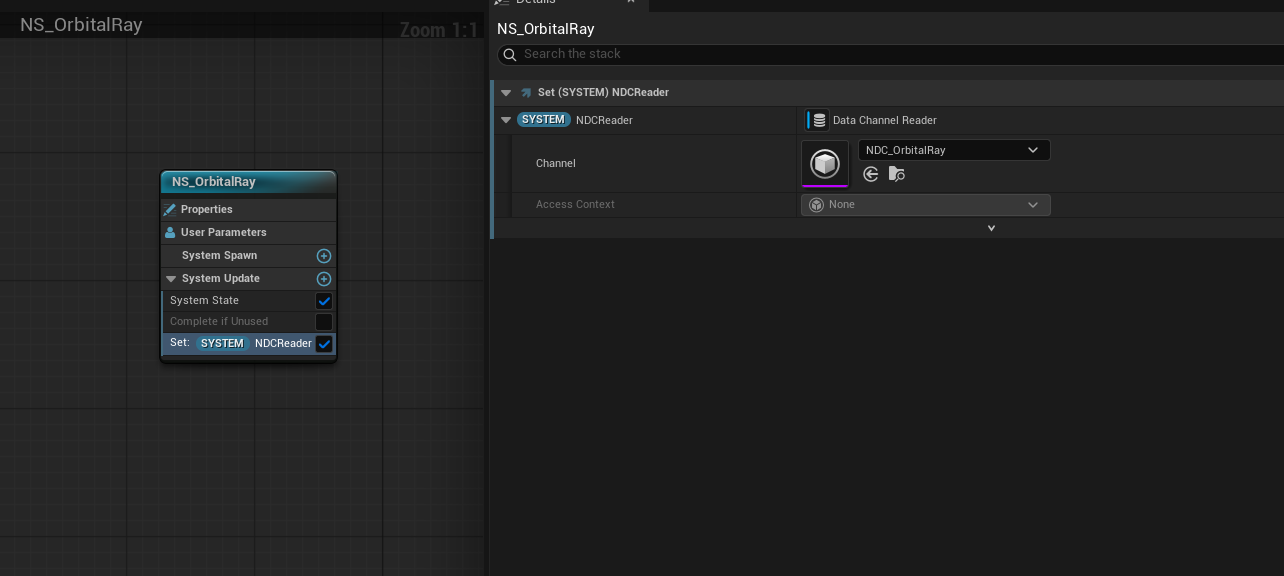
A screenshot of a software interface showing a node labeled 'NS_OrbitalRay' connected to a system read block labeled 'NDCReader' and a data channel reading 'NDC_OrbitalRay'.
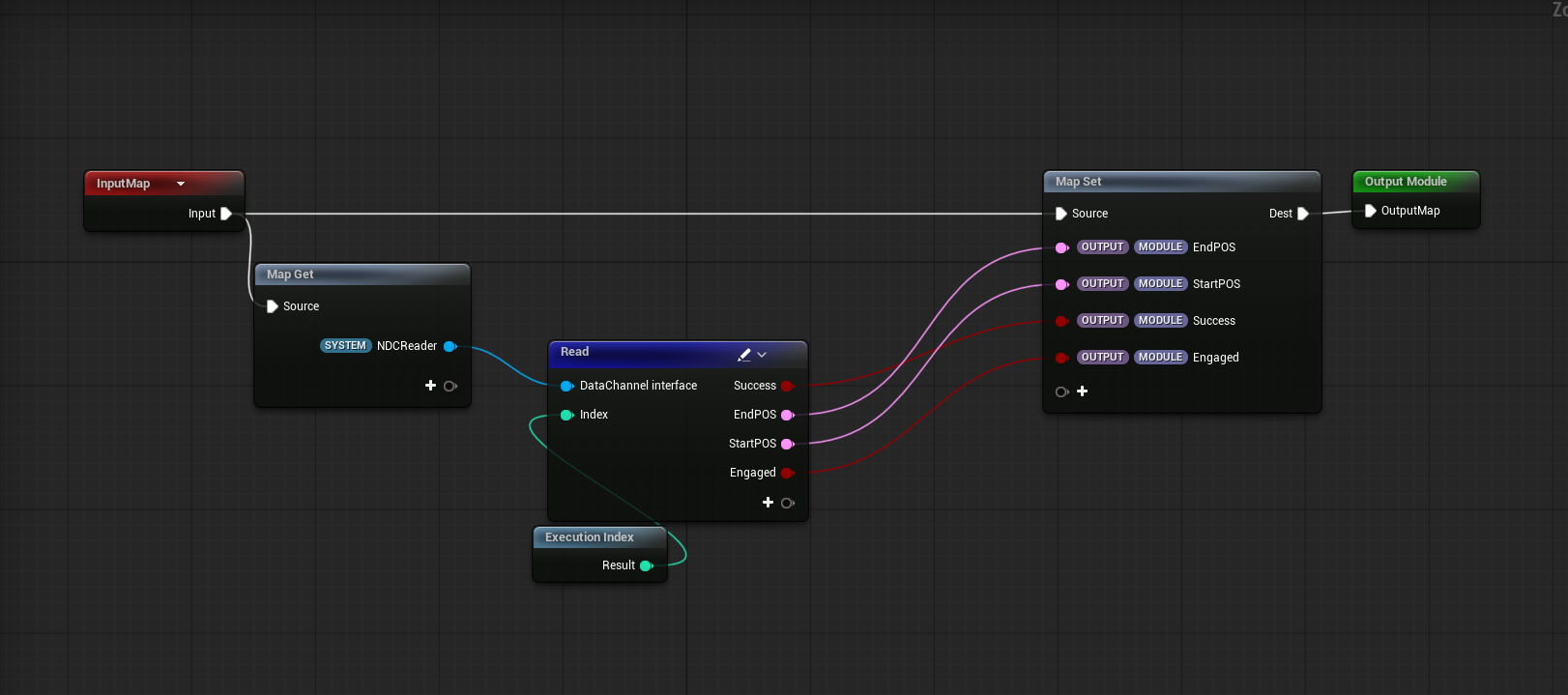
Screenshot of a visual scripting interface showing nodes connected by wires, including InputMap, Map Get, Read, Map Set, and Output Module, used for programming or game development.

We then read the data coming in and it is set into the output context for use inside the emitter modules.
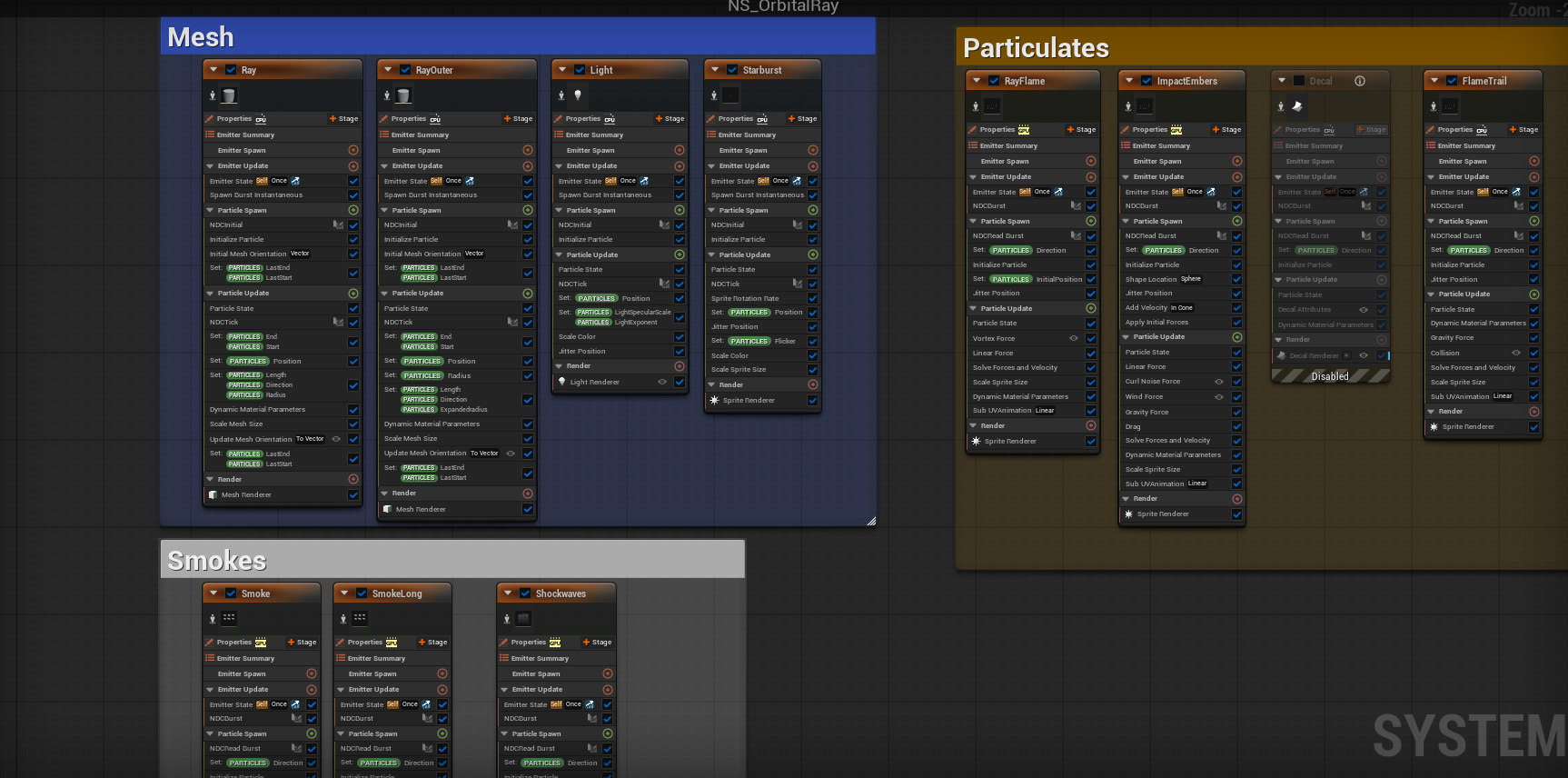
Screenshot of a 3D modeling or animation software interface showing nodes for creating particles, smoke, and lights, with sections labeled 'Mesh,' 'Particulates,' and 'Smokes.'
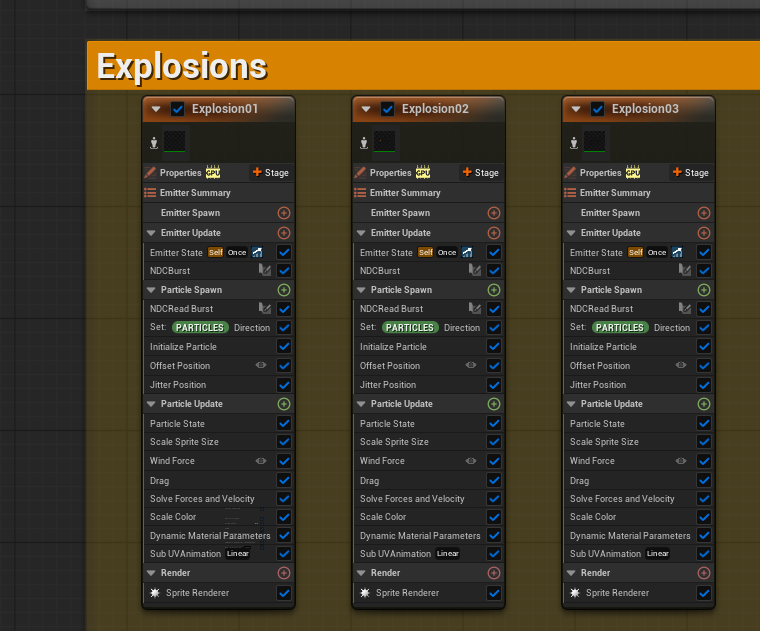
A screenshot of an animation software interface displaying three explosion effect panels labeled 'Explosion01', 'Explosion02', and 'Explosion03'. Each panel contains settings for properties such as emitter summary, burst, particles, and render options.

Lots of emitters were used to achieve the effect.

The data channel is selected inside the Niagara system for use.
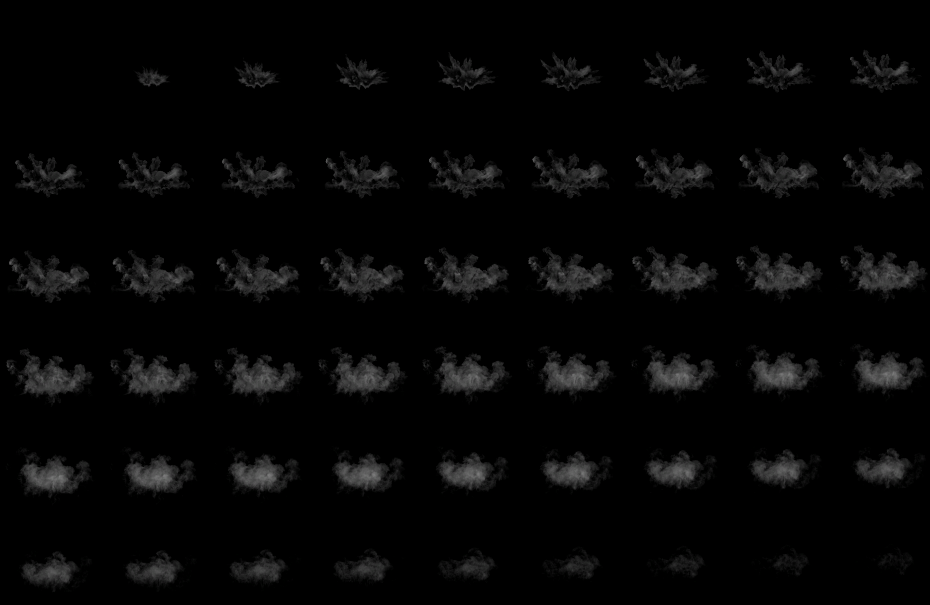
Multiple small, white, foggy smoke clouds arranged in a grid pattern on a black background.

Diffuse texture sheet for an explosion flipbook made in houdini
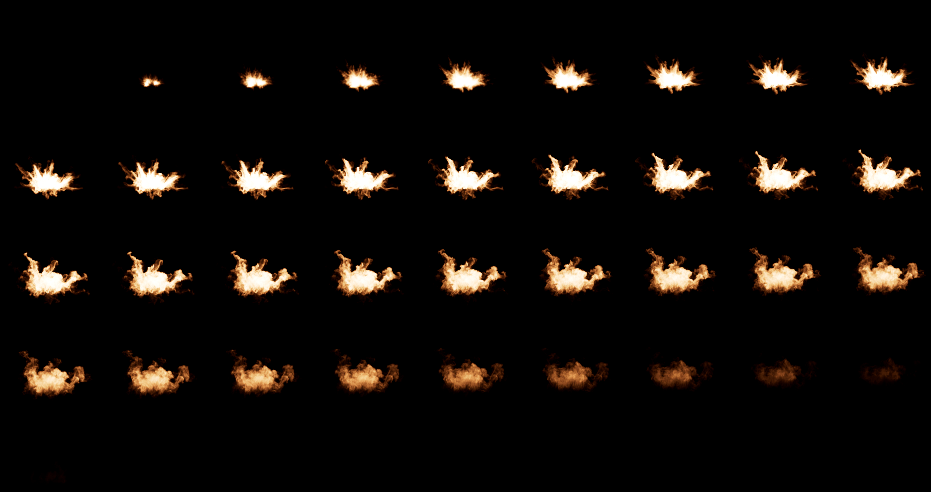
Sequence of firework explosions captured over time against a black background.

The temperature/emissive portion of the same texture sheet
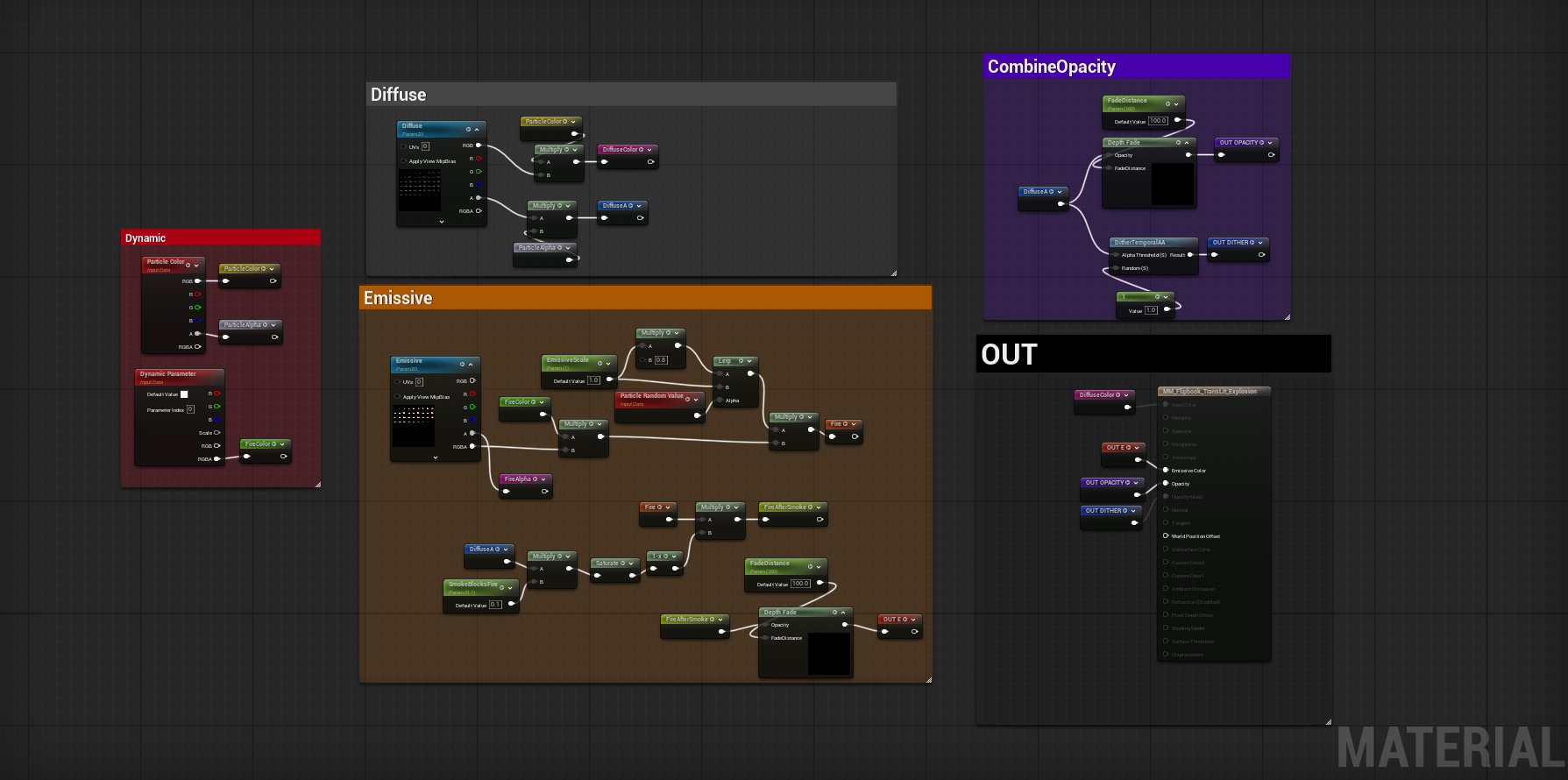
Screenshot of a complex digital node-based visual effects or shader editor with various interconnected nodes labeled 'Diffuse,' 'Emissive,' 'CombineOpacity,' and others.

Unreal master material for explosions.
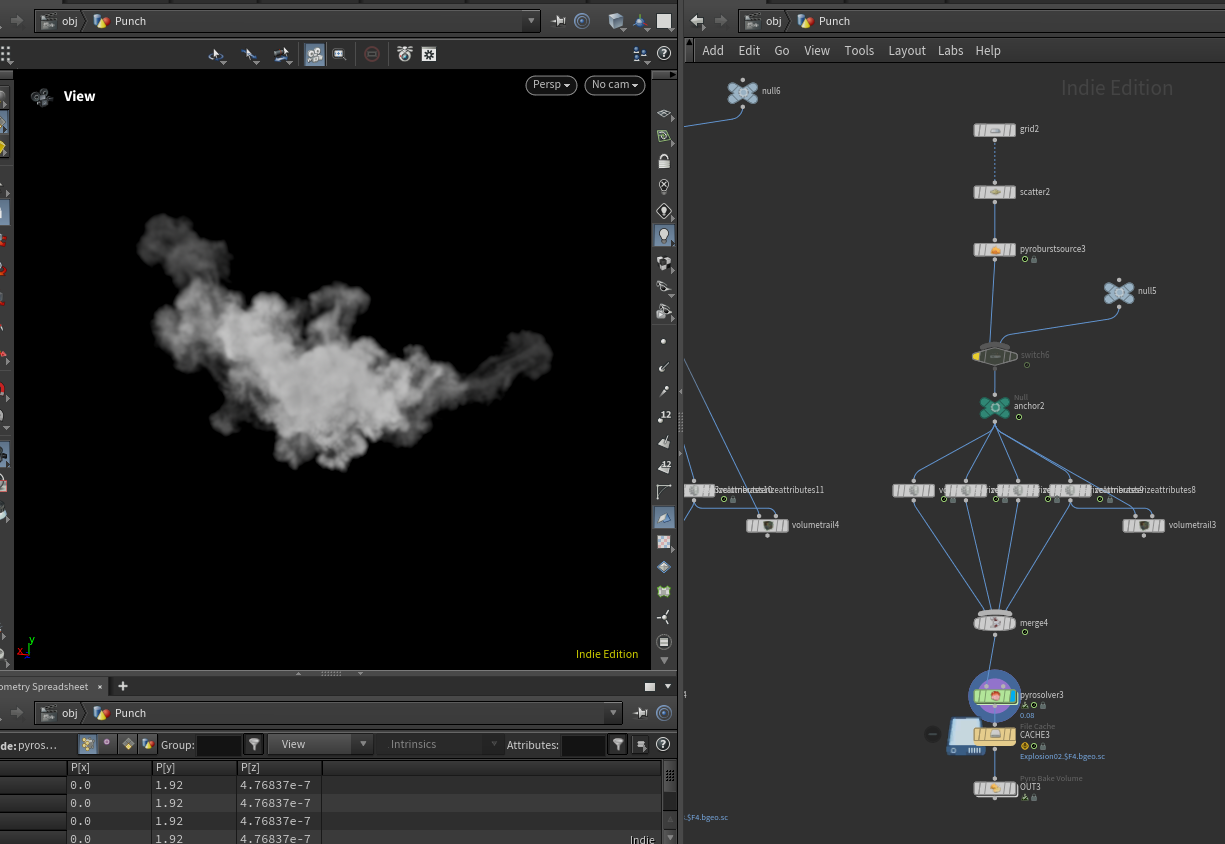
A computer screen displaying a 3D smoke simulation with nodes and connections in Houdini software, showing a cloud of smoke on the left and the procedural network on the right.

One of the explosion networks in Houdini
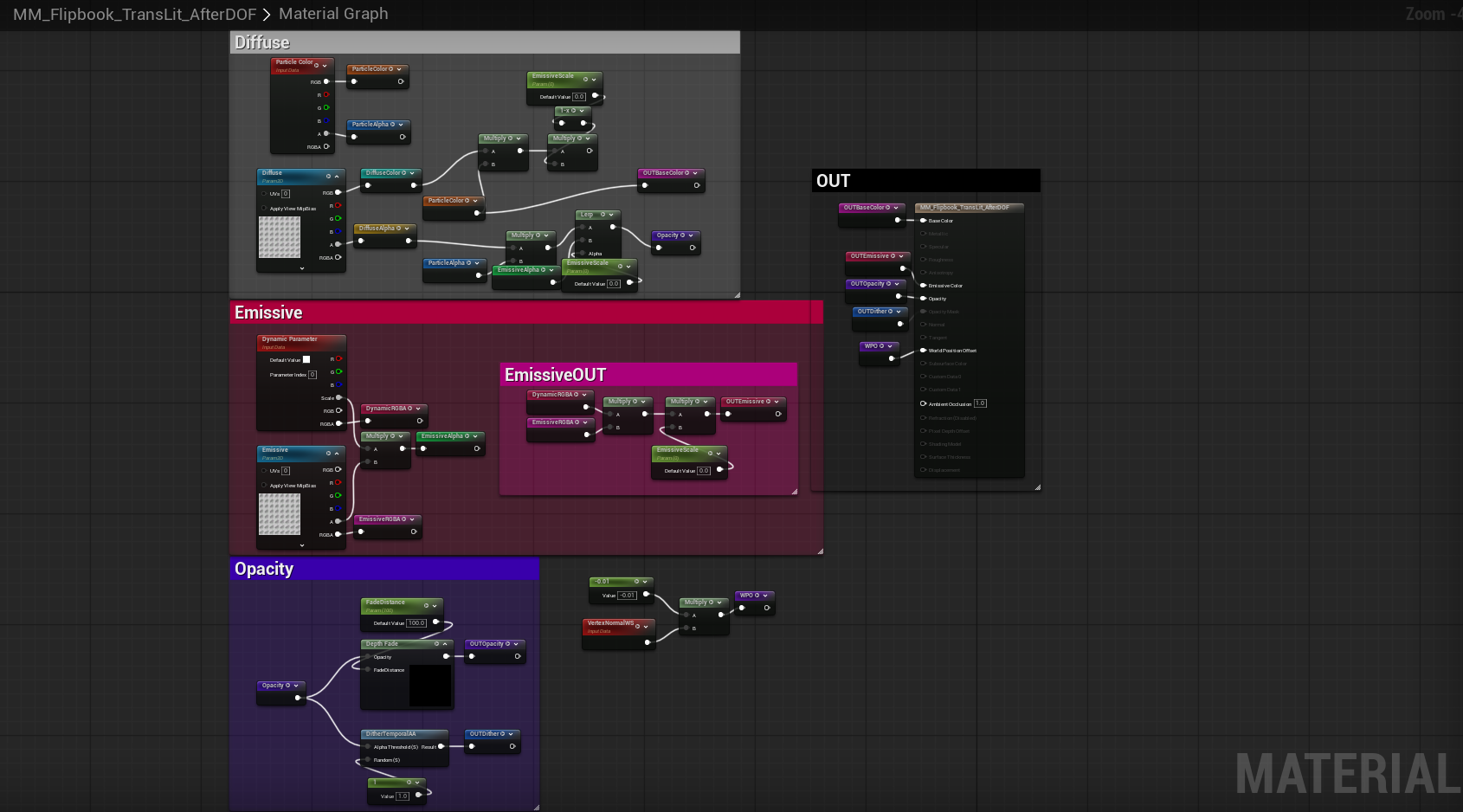
A screenshot of a node-based material editor interface for a 3D rendering software, featuring color-coded nodes labeled 'Diffuse', 'Emissive', 'Opacity', and related parameters connected by lines to define material properties.

Unreal master material for smoke.